
Heritage Welsh Slate Roof Preservation - 1860s Property, Penshurst
A 155-year-old Welsh slate roof in Victoria's Western District, preserved rather than replaced, with 80% of the original slate lifted, sorted and reinstated over an entirely rebuilt roof system.
An 1860s Property in Victoria's Volcanic West
Penshurst sits at the base of Mount Rouse, in the volcanic country of Victoria's Western District. The town was surveyed in 1851, but it was the late 1850s and 1860s that built it, when the large pastoral estates were established and the local bluestone basalt quarried from the volcanic flows went into almost every substantial building in the district.
Properties from this period share a particular character. Heavy bluestone walls, simple strong rooflines, and a slate roof that has outlived several generations of owners.
This property is one of them. The roof is approximately 155 years old and is laid in Welsh slate, imported during the colonial period when quarries in North Wales supplied much of the roofing slate that reached Australian ports. On a building of this age, the roof is not a component. It is a substantial part of what makes the property significant, and it is the element most likely to be lost through a well-meaning but heavy-handed repair.
Original Material That Cannot Be Bought
On a roof this old, small defects do not stay small. Water finds timber, then ceilings, then hidden cavities, and by the time it appears inside, it has usually been travelling for years.
The obvious answer on a roof at this age is full replacement. On this property that was the wrong answer, for one reason: the Welsh slate could not be replaced like for like.
The quarries that supplied the original material either no longer operate at the same scale or produce slate with a different colour cast, thickness and surface texture. Sourcing 155-year-old Welsh slate in matching size and weathering is not a procurement problem that money reliably solves. Once that slate leaves the roof and is skipped, the building's character goes with it permanently.
The brief that followed was narrow and difficult. Preserve the appearance exactly. Make the roof perform reliably again. Do both without the safety net of new material.
During Works vs. Completed
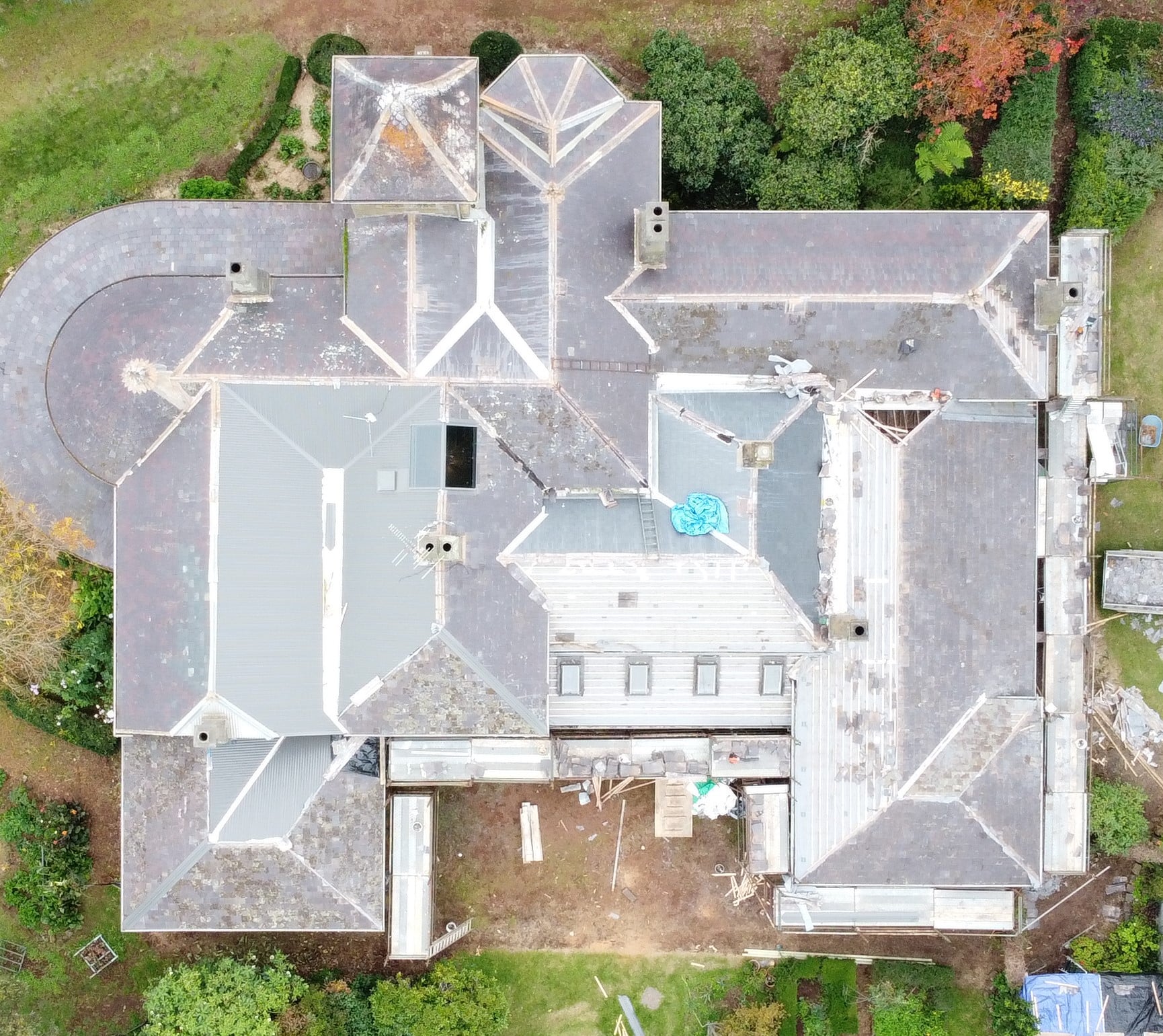
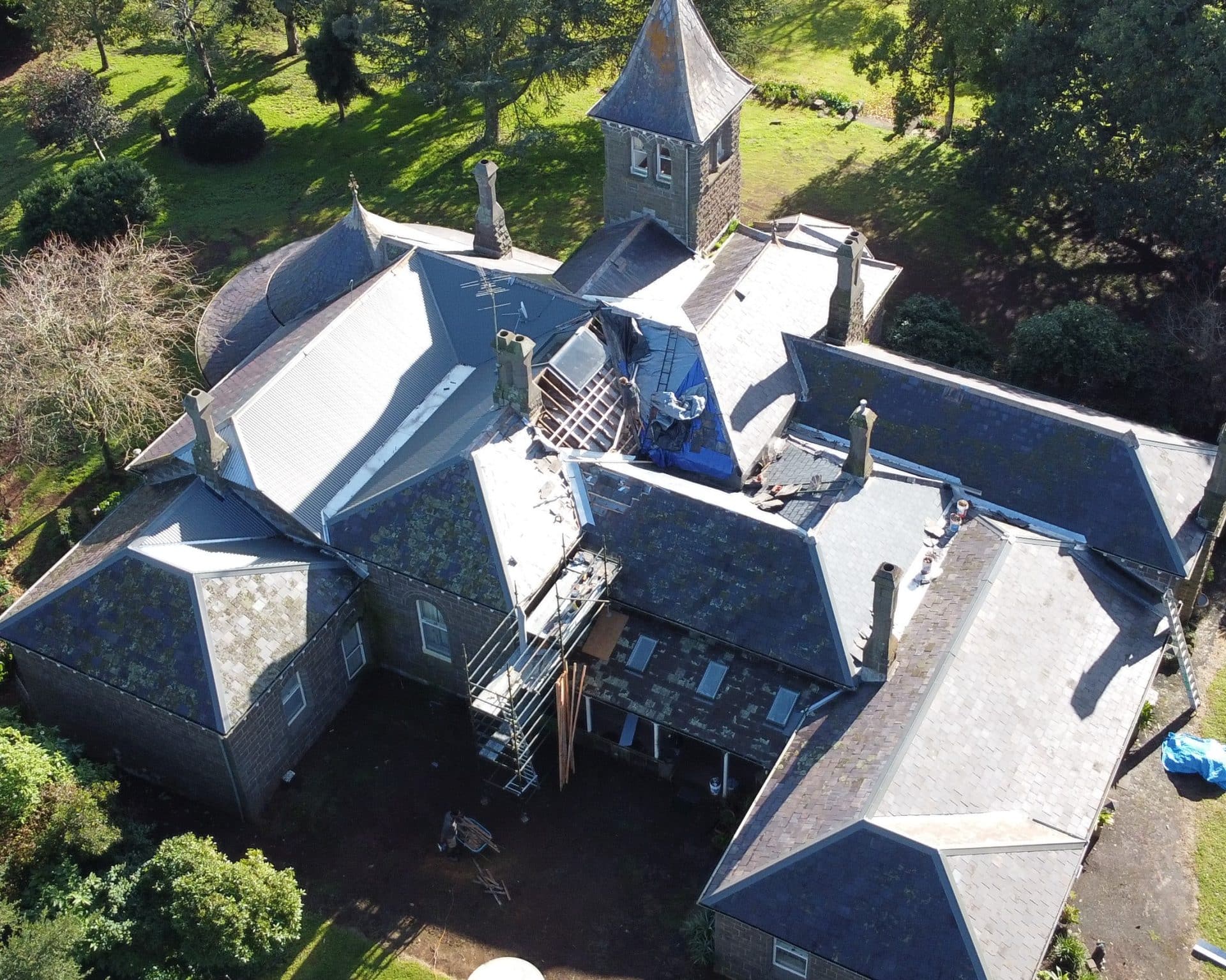
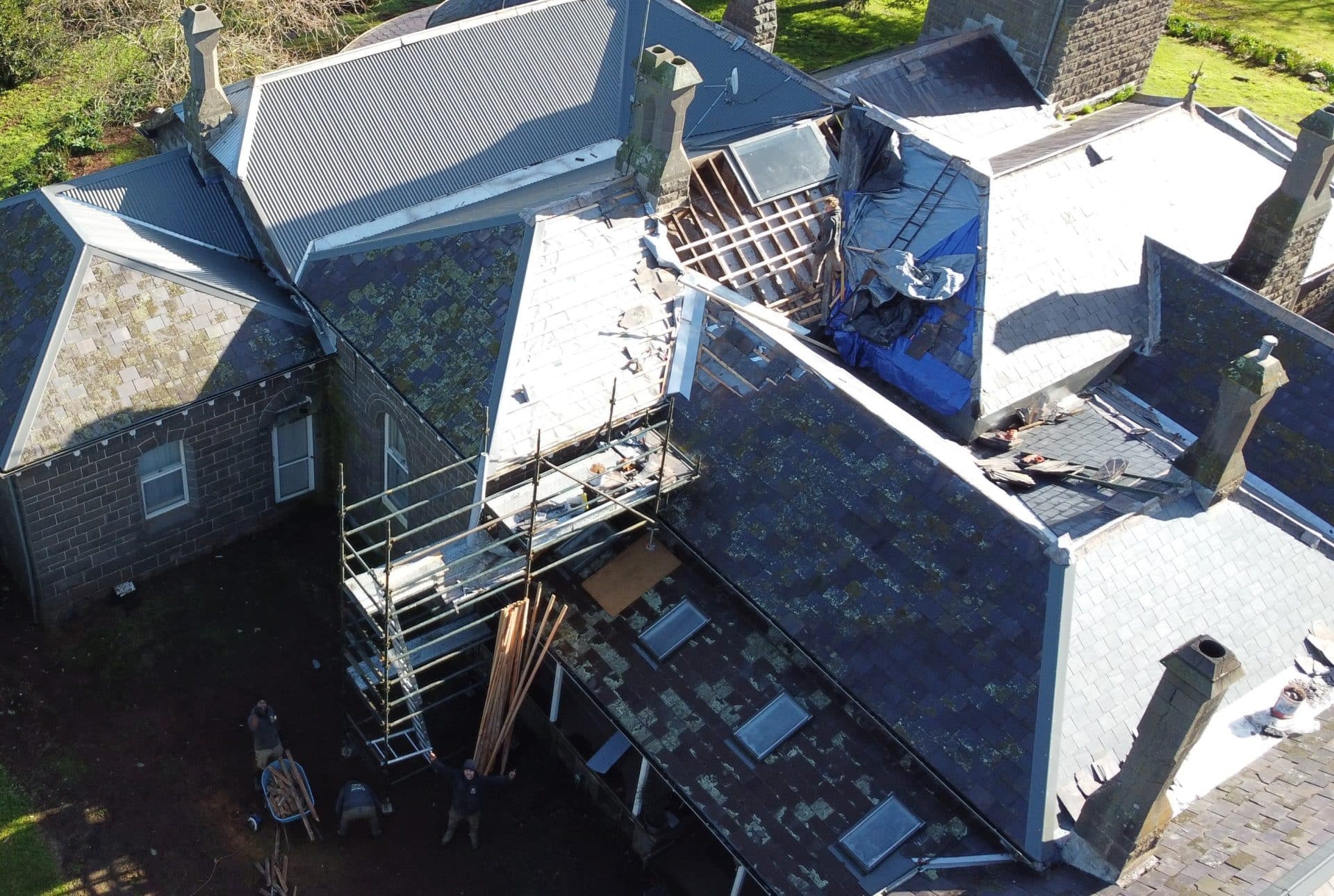
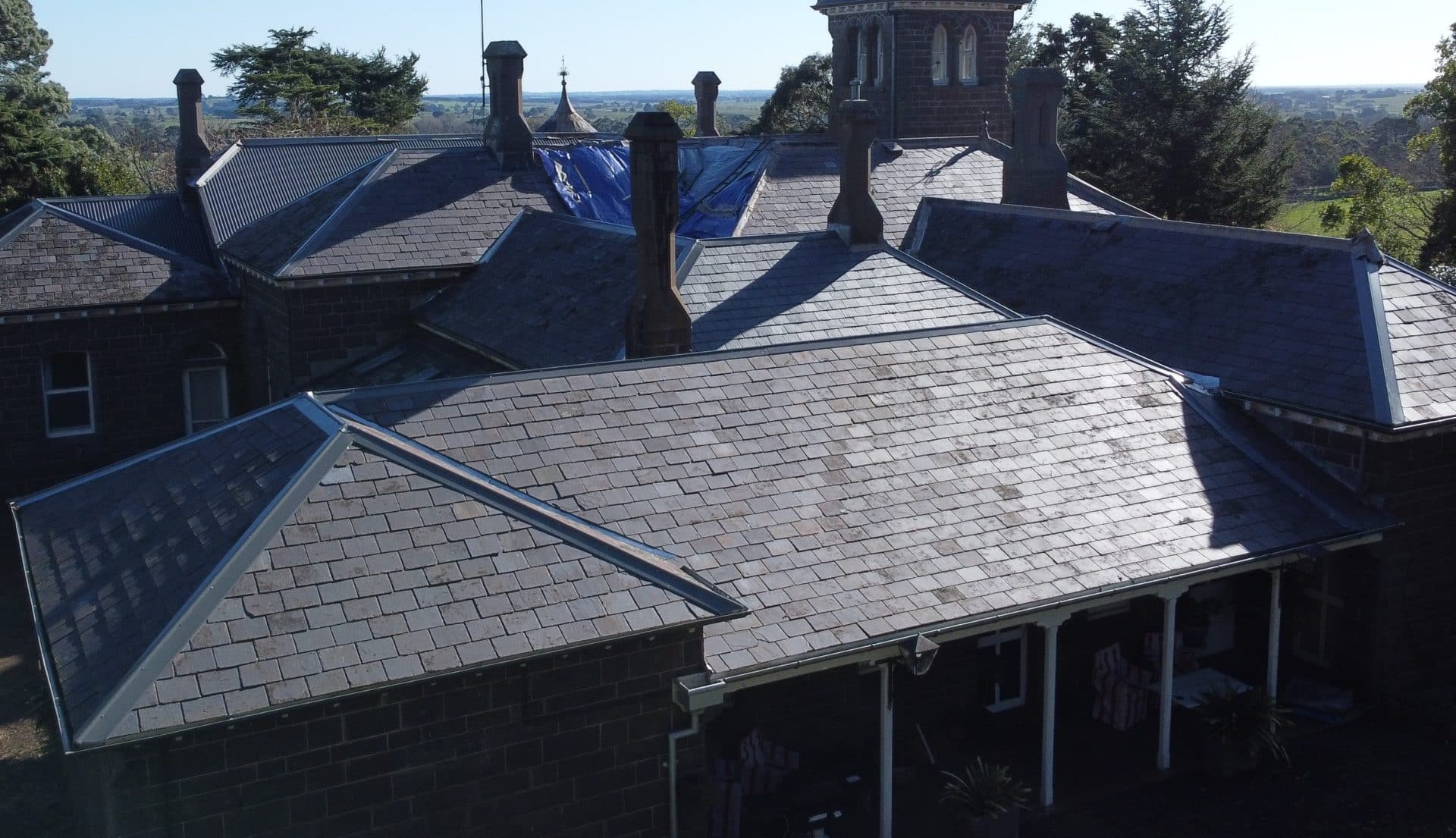
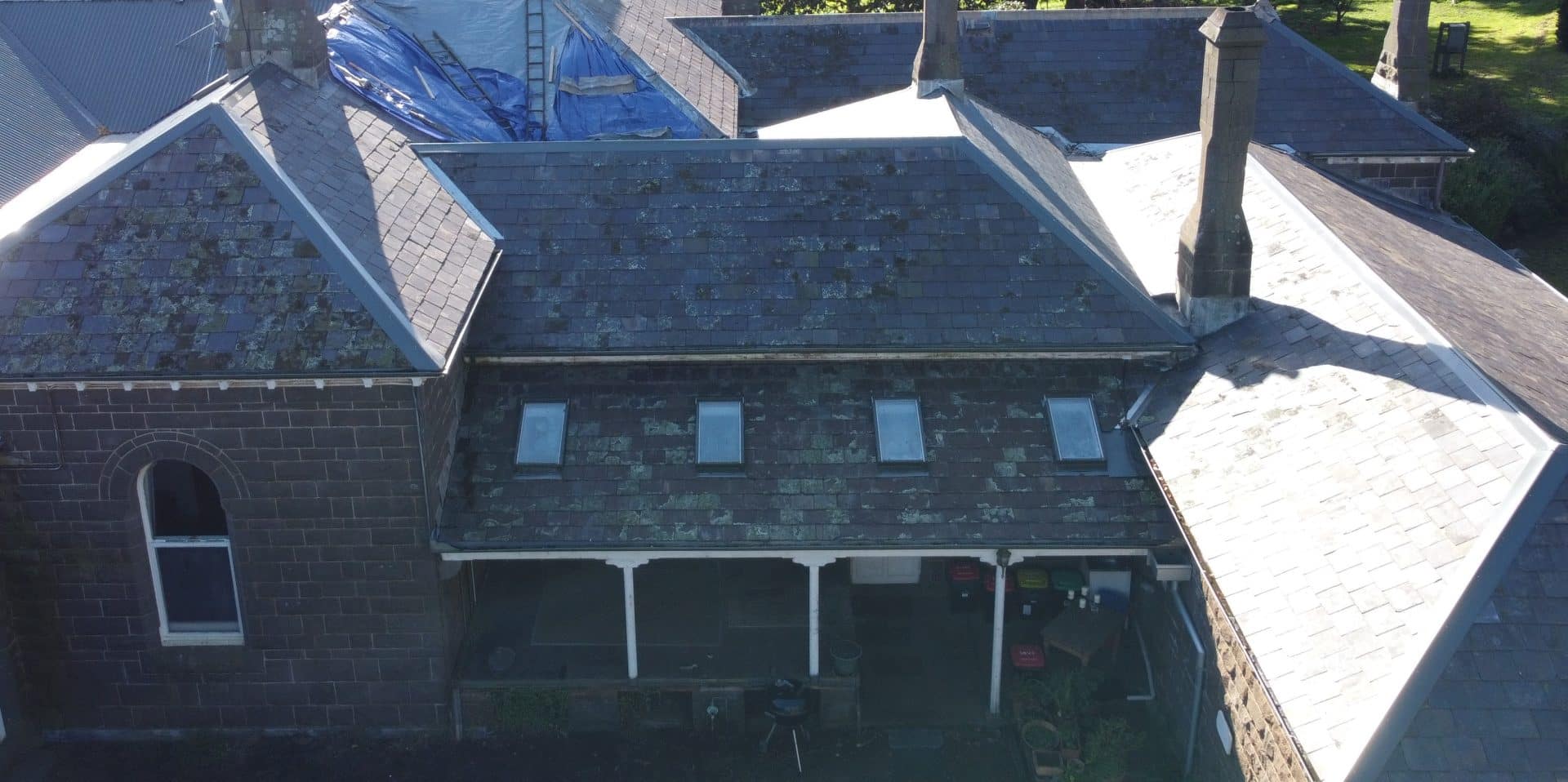
Two stages of the same 155-year-old Welsh slate roof. Left: works underway at Penshurst. Right: slate reinstated, roof complete.
Lifting Half the Roof Before Committing to a Scope
We do not quote a heritage roof from the ground or from a drone image. Every scope starts with a heritage roof inspection. On a 155-year-old slate roof, the condition that matters is underneath.
Around half the slate and battens were carefully lifted so the roof could be assessed properly. What that revealed shaped the entire job.
The original craftsmanship was exceptional and most of the Welsh slate was still fully serviceable. Slate of this quality does not fail in the way modern roofing materials fail. The real risks sat in the supporting system: ageing battens, tired fixings, and drainage and junction details that had stopped providing reliable weatherproofing decades ago.
That inspection-led approach is central to how we handle heritage roof restoration. It converts an assumption into a measured scope, and on this roof it was the difference between preserving the slate and needlessly replacing it.
Preserving the Slate, Rebuilding Everything Beneath It
The decision was to preserve first and rebuild underneath.
Every slate lifted was assessed and sorted. Sound slate was set aside for reinstatement. All timber battens were replaced, and insulation was added beneath the slate to improve thermal performance without altering anything visible from the ground.
Slate was then reinstalled with new nails, with coursing and alignment kept consistent with the original setout. This is the part of the work that decides whether a preserved roof reads as authentic or as a patch job. Coursing that drifts by even a small margin across a long roof plane is visible from the street, and on a building of this age it is the detail that gives away a poor restoration.
Reaching 80% by Borrowing From Concealed Areas
Not every slate survived the assessment, which left a shortfall.
Rather than introduce new slate of a different colour and thickness across visible roof planes, we took slate from concealed sections of the roof and used it to complete the prominent areas. Those concealed sections were then converted to Colorbond sheeting, where nothing is visible from any approach to the property.
The result was around 80% of the original Welsh slate reinstated, with every visible plane finished in original material. The compromise was moved to where nobody will ever see it, which is the correct place for a compromise on a heritage building.
This is the kind of judgement that separates heritage roofing from general roofing. The material inventory is fixed, so the skill sits in deciding where it goes.
Renewing the Drainage and Junction Details
Slate very rarely fails on its own. Roofs fail at the junctions.
Valley gutters, flashings and capping were renewed progressively as each section was reinstated, so the roof was never left open to weather. These details carry the water, and on this property they were the actual source of the risk that brought us there.
Renewing them properly is what converts a preserved roof from a cosmetic outcome into a functional one.
What Was Done
The Penshurst Project in Detail

The Roof, Reinstated
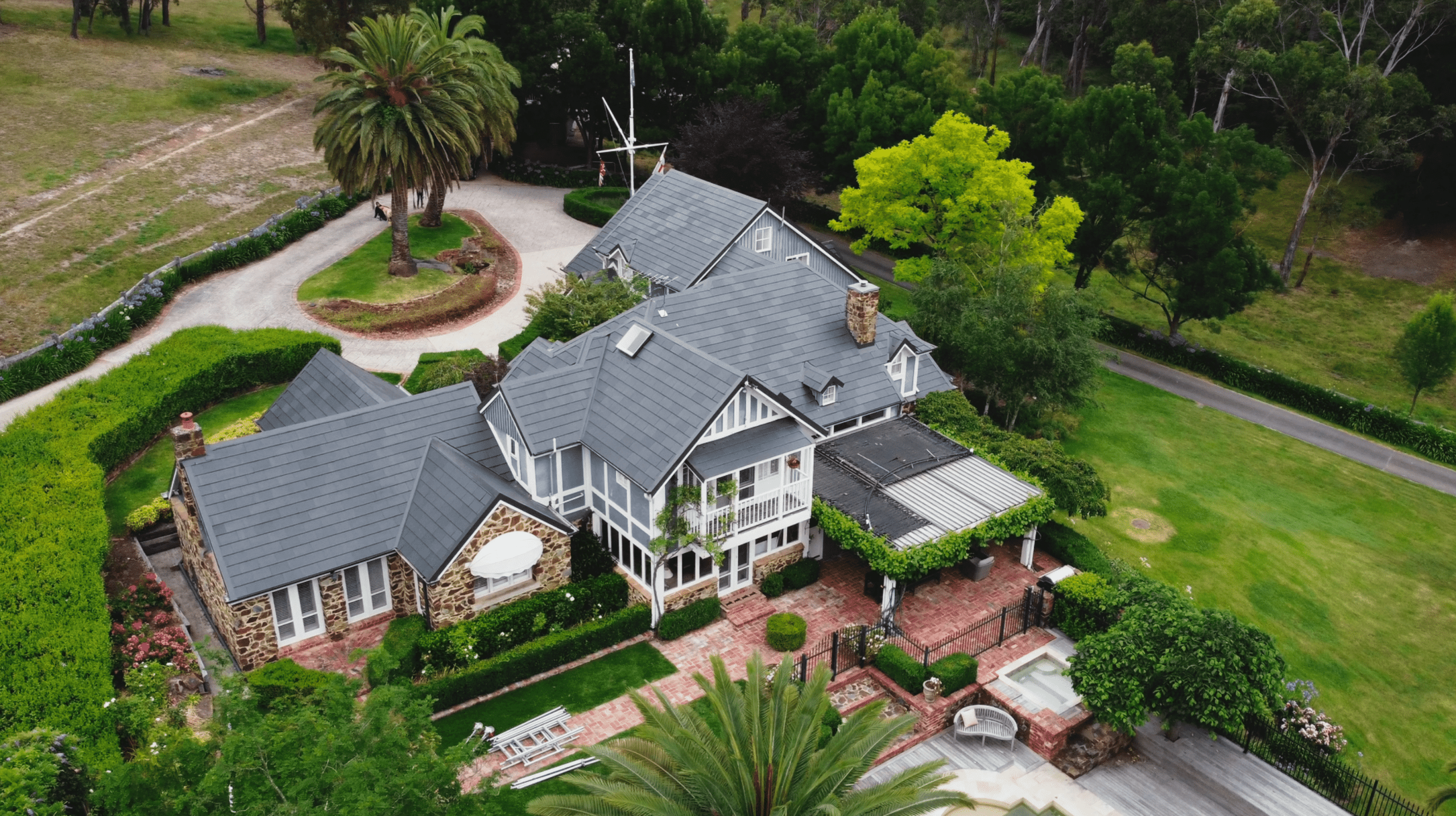
From every approach, the roof looks the way it has looked for 155 years. The Welsh slate is the same slate. The coursing follows the original setout. Nothing about the finished result announces that work has been done, which on a heritage building is the highest compliment available.
Underneath, almost none of it is original. New battens, new fixings, added insulation, renewed valleys, flashings and capping. The system has been rebuilt from the slate down.
That is the outcome heritage owners are usually told they cannot have. Preserving a roof and making it perform are treated as a trade-off. On a roof where the original material is still sound, they are not. It just takes a scope built from what the roof actually shows you rather than what its age suggests.
Frequently Asked Questions
In many cases it can be saved. Good quality Welsh slate regularly outlasts the battens, nails and flashings supporting it, so the slate is often the soundest part of the roof.
The only way to know is to lift a representative section and assess the material directly.
It varies with the original quality and how the roof has been maintained. On this Penshurst property we reinstated around 80%.
Where there is a shortfall, slate can be relocated from concealed sections so that every visible plane stays original.
Most Welsh slate on Australian buildings arrived during the colonial period. Matching it today means matching colour cast, thickness, size and 150 years of weathering all at once.
Even where Welsh slate is available, a new slate sitting beside an original one is usually obvious.
Yes. This project was at Penshurst in the Southern Grampians, around three hours from Melbourne.
We regularly work on heritage properties across regional Victoria where specialist slate expertise is not available locally.
Work on Victoria's Most Significant Heritage Roofs
Each of these projects involved an irreplaceable heritage roof on a historically significant building. Selected for the complexity of the work and the significance of what was preserved.
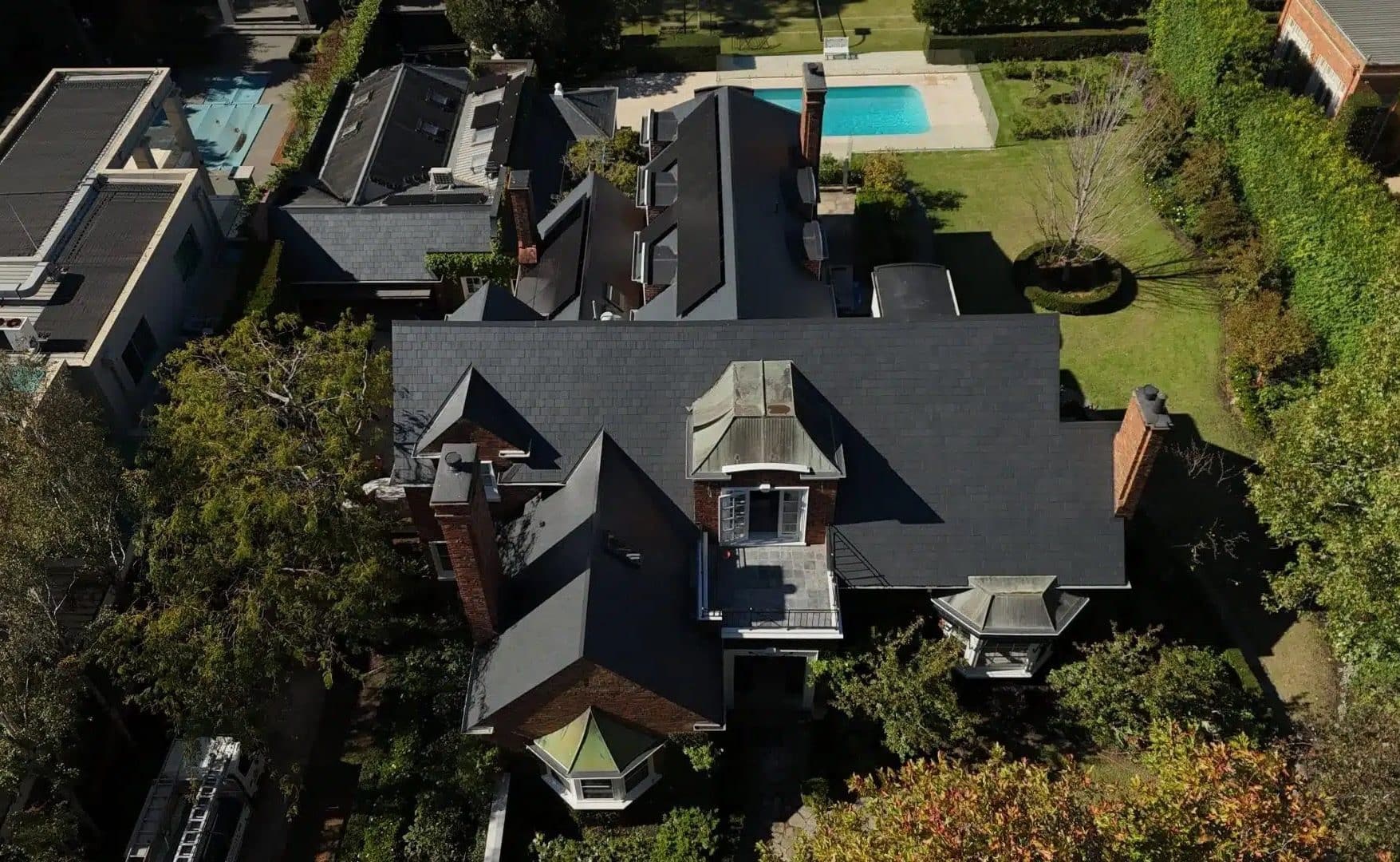
Heritage Slate Replacement with Solar Integration
A 1930s English-style home on Scotch Hill. Full slate replacement with structural correction, solar integration and Colorbond metalwork throughout.
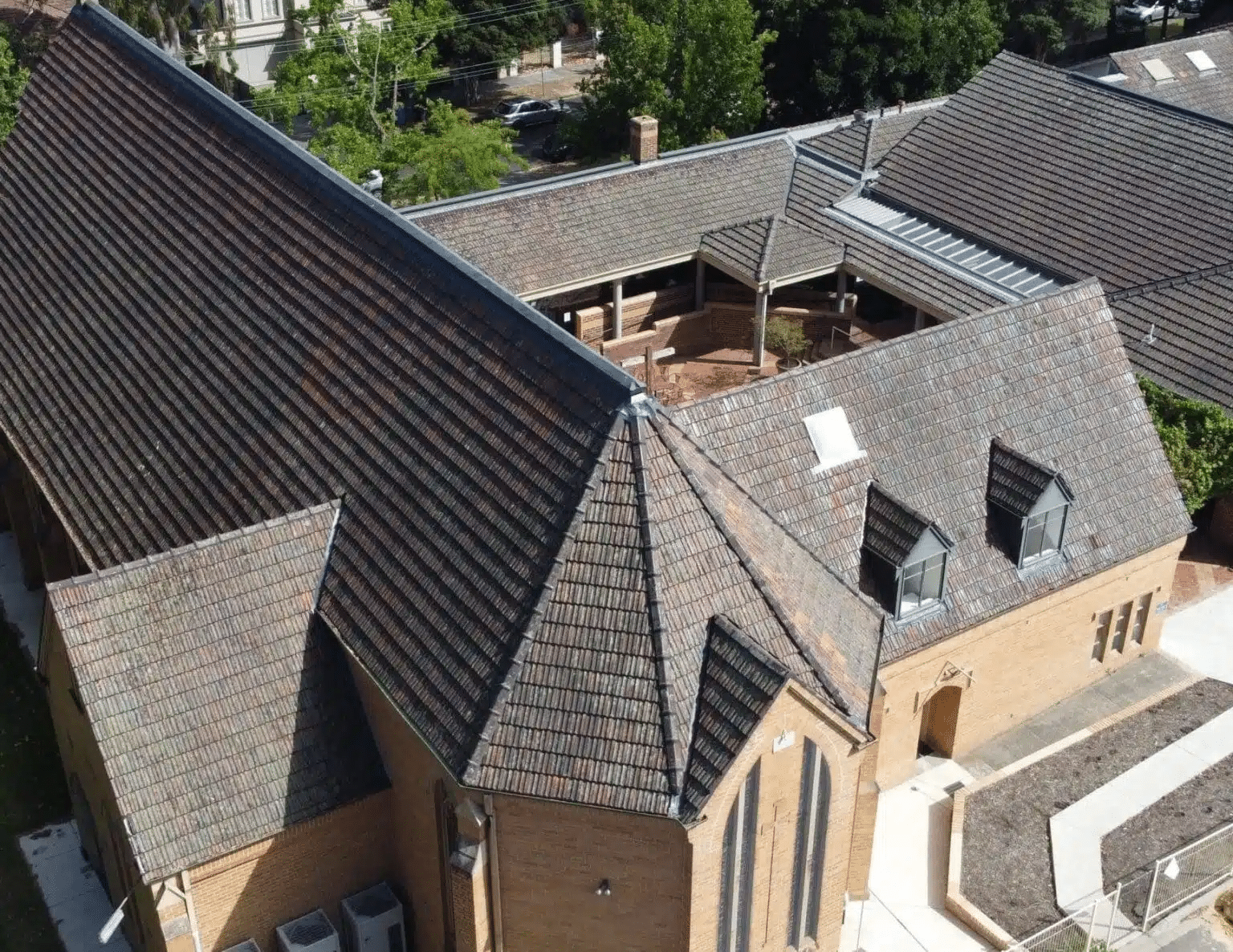
Heritage Terracotta Roof Restoration, Historic Church
A Gothic Revival church restored across two coordinated stages with lead flashings, valley metalwork and ridge capping fully renewed.
Heritage Cedar Shingle to Barrington Tile Replacement
A heritage estate at Wonga Park. Original cedar shingles replaced with Barrington terracotta tiles, matched to the building's heritage character and council requirements.
Preserve Your Heritage Roof Before Small Defects Spread
Most heritage roofs can be preserved. We'll assess the condition and give you a clear scope before any work starts.