
Salvaged Evan's Brothers Terracotta Reinstated on a New Build, Kew
A discontinued terracotta tile, stripped from a house about to be demolished, 78% of it saved intact. The owner kept it on his own property for three years. Then we laid it on the two homes that replaced the one it came off.
A Tile You Cannot Buy
Evan's Brothers made terracotta roof tiles in Oakleigh, Victoria, from 1912 until 1972. They were a well-known and trusted product for sixty years, and then the company stopped.
There is no supplier. There is no current equivalent. If a tile breaks, it is not replaced, because nothing to replace it with exists.
That single fact set every decision on this project. On an ordinary job, a broken tile is a nuisance and a line item. Here, every tile broken was gone permanently, and the count you finished with was the count you had to work with.
The House Was Coming Down
The original home in Kew was being replaced. Two conjoined dwellings were going up in its place, and the old house, along with its roof, was scheduled for demolition.
This is a common scenario in Kew, where period homes on generous blocks are regularly redeveloped into dual occupancies. Roofs like this one come off somewhere in the suburb most months. Almost all of them go to landfill.
The owner did not want to lose the tiles.
It is worth being clear about what that means. There was no heritage overlay obliging anyone to keep anything. Sending the roof to landfill and buying new tile would have been faster, simpler and almost certainly cheaper. The salvage was a choice, made because the owner wanted the new buildings to carry something of what stood there before.
Their brief, in their own words, was to incorporate old school look on top of new school design.
Taking a Roof Off Without Breaking It
Stripping a roof is normally quick. You are throwing the tile away.
This was the opposite job. Every tile had to come off intact, from a roof that had been in the weather for decades, on tile that had gone brittle with age. There is no allowance for breakage when the material is extinct.
Tiles were removed individually, hand cleaned one at a time, and stacked for storage. Not sorted into good and bad. Each one, by hand.
78% came off intact.
On tile that had been in the weather for decades, that is a high number, and it is the figure the whole project turned on.
Three Years in the Owner's Backyard
This is the part of the project that has no parallel anywhere else in our work.
Once the tiles were off in 2018, there was no roof to put them on. The old house came down. The site was cleared. Two new dwellings were designed, approved and built.
The tiles went to the owner. He kept them, on his own property, in a place he knew they would be safe, for three years.
That is worth sitting with. Not a warehouse, not a supplier holding stock, not a contractor's yard. A homeowner storing an entire roof through a demolition and a build because he had decided it was going back on.
A stored roof is a liability with no upside. It cannot be replaced if it is damaged, it takes up space, and it earns nothing sitting there. Nobody does it unless they mean it.
In 2021, when the new buildings were ready, he called us back to lay it.
An Old Tile on a New Roof
Reinstating pre-1972 tile on 2020s construction is not a matter of laying it back down the way it came off.
The new roof was built to current standards. Heavy duty sarking went in beneath the tile to lift the new roof's energy rating, which is a requirement the original roof never had to meet. Ridge capping was bedded in a clay sand mix to hold it permanently. Every tile was cut, wired or clipped, so the roof meets modern wind uplift requirements that did not exist when the tiles were made.
The tile is old. Everything underneath and around it is not.
That is what the client meant by old school look on new school design, and it is the technical heart of the job. Terracotta of this age will outlast most things laid today, but only if the system beneath it is built to current spec.
What Was Done
The Roof Went On First.
Both photographs were taken on the same site, months apart. In the first, the salvaged Evan's Brothers tile is already laid — the building beneath is still bare brick, the facade unrendered, the landscaping unplanted. The oldest material on the site went on before some of the newest parts of the house existed.
Two New Homes, One Old Roof
Two new homes in Kew, built to current standards, wearing a roof that is decades older than they are.
From the street the tile does what tile of that age does: it reads as settled, weathered and permanent, on buildings that were finished a year ago. That is not an effect you can buy, and it is why the owner wanted it.
When the building survives, the answer is usually roof restoration rather than salvage. Renew the battens, metalwork and insulation, and lay the original tile straight back down where it has always been. That is what we did on a century-old roof in St Kilda.
Here the building did not survive. So the tile had to outlive it.
None of it was required. A new roof would have been legal, quicker and easier. The tiles are on those buildings because someone decided they were worth keeping, stored them himself for three years, and then called back the roofers who had taken them off to put them on again.
Three years is a long time to hold a decision. It is also a long time to hold a phone number.
Frequently Asked Questions
Yes, if they come off intact and there are enough of them. The tile has to be removed individually rather than stripped, cleaned, and stored somewhere it will not be damaged.
It then has to be laid to current standards, which usually means new sarking and modern fixing. The tile is old. The system beneath it is not.
On this Kew project, 78% came off intact. The rate depends on the tile's age and condition and on how carefully it is removed.
That figure is the number that decides whether salvage is viable at all. Below a certain point there is not enough roof left to be worth keeping.
They are cleaned, stacked and stored somewhere safe. On this project the owner kept them on his own property for three years, through the demolition and the full construction programme.
Storage has to be planned before the roof comes off, because a damaged salvaged tile cannot be replaced.
Usually not exactly. Evan's Brothers closed in 1972, so there is no current supply. Sometimes salvaged stock can be sourced second-hand, but colour and weathering rarely match.
This is why the removal matters more than anything else in the process. Breakages in the wrong place are permanent.
The tile itself is not the issue. The system beneath it is. New construction needs sarking for energy performance and tiles cut, wired or clipped for wind uplift.
Salvaged tile laid over a compliant modern system meets current requirements. The tile performs to today's standard because everything under it does.
More Projects Where the Original Material Was Worth Keeping
Different buildings and different briefs. The same conviction that the original material is worth the extra work.
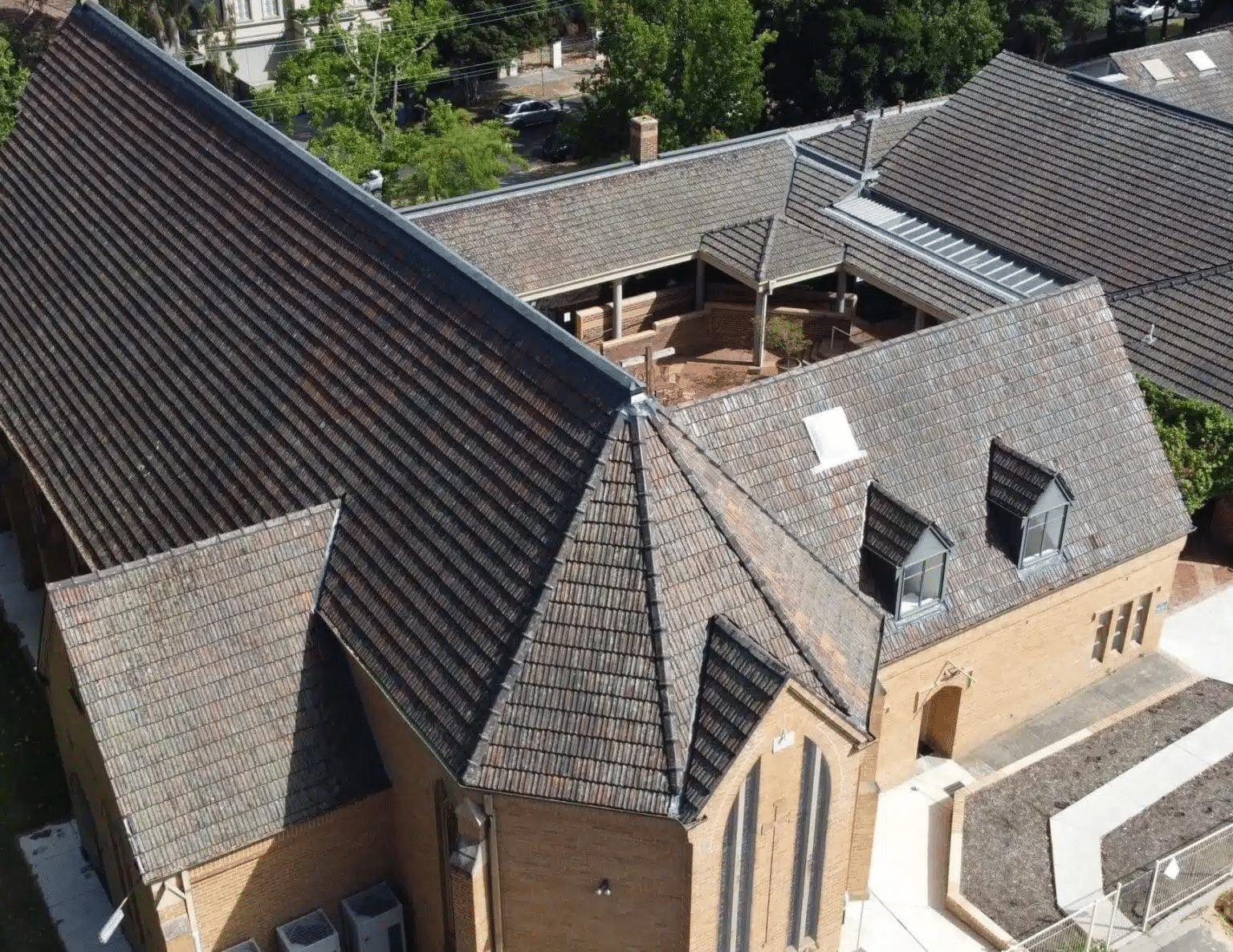
Heritage Terracotta Church Roof Restoration
Aged terracotta retained and deliberately left unwashed while the drainage beneath was rebuilt across two coordinated stages.
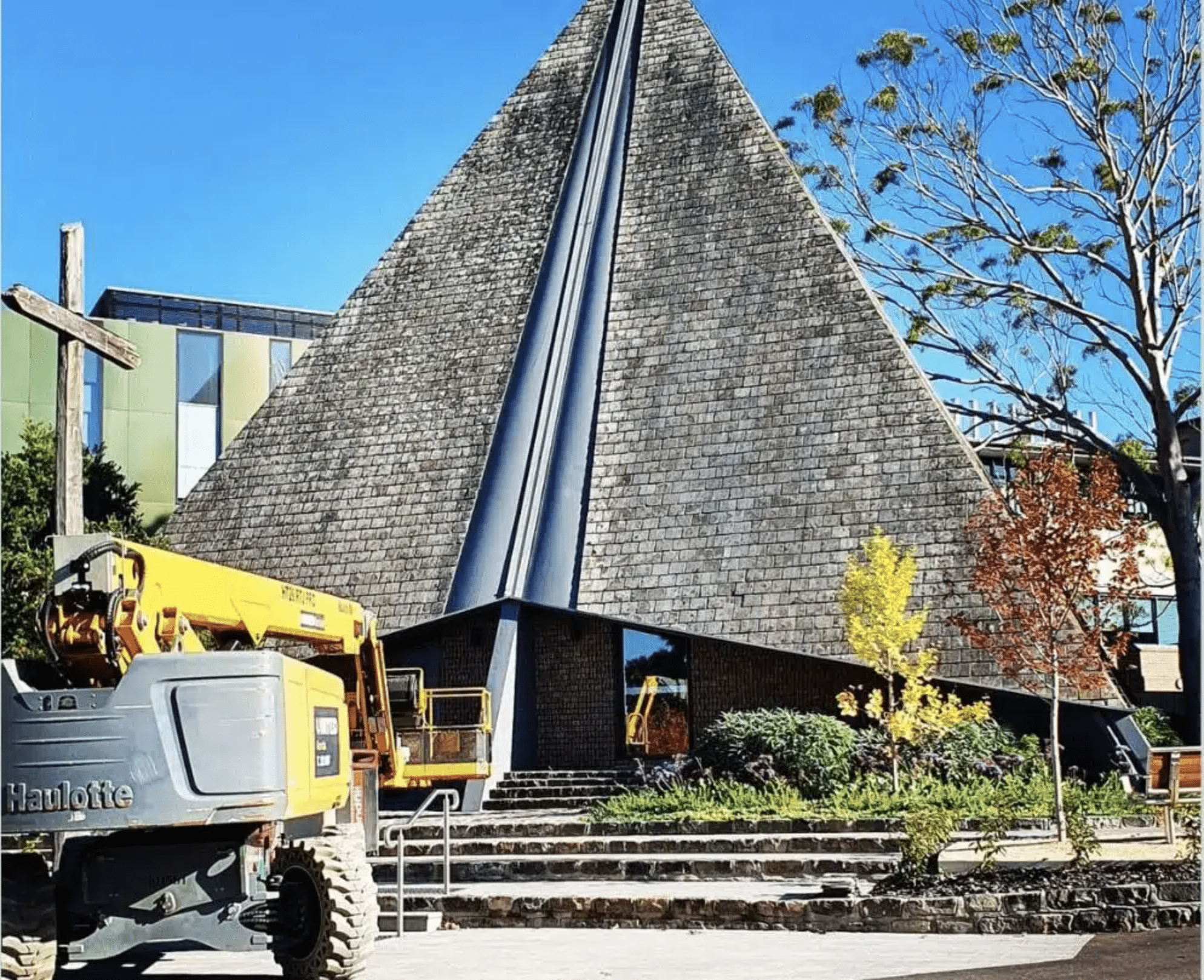
Independent School Campus Roof Restoration
Multiple roof types across a multi-building campus, restored and repaired in stages around term dates without disrupting a live school.

Heritage Welsh Slate Roof Preservation
A 155-year-old Welsh slate roof that could not be replaced like for like. 80% of the original slate reinstated over a fully rebuilt roof system.
Rebuilding, and Want to Keep the Roof?
This has to be decided before demolition, not after. Once a roof comes off badly there is no second attempt. Book an assessment while the choice is still open.