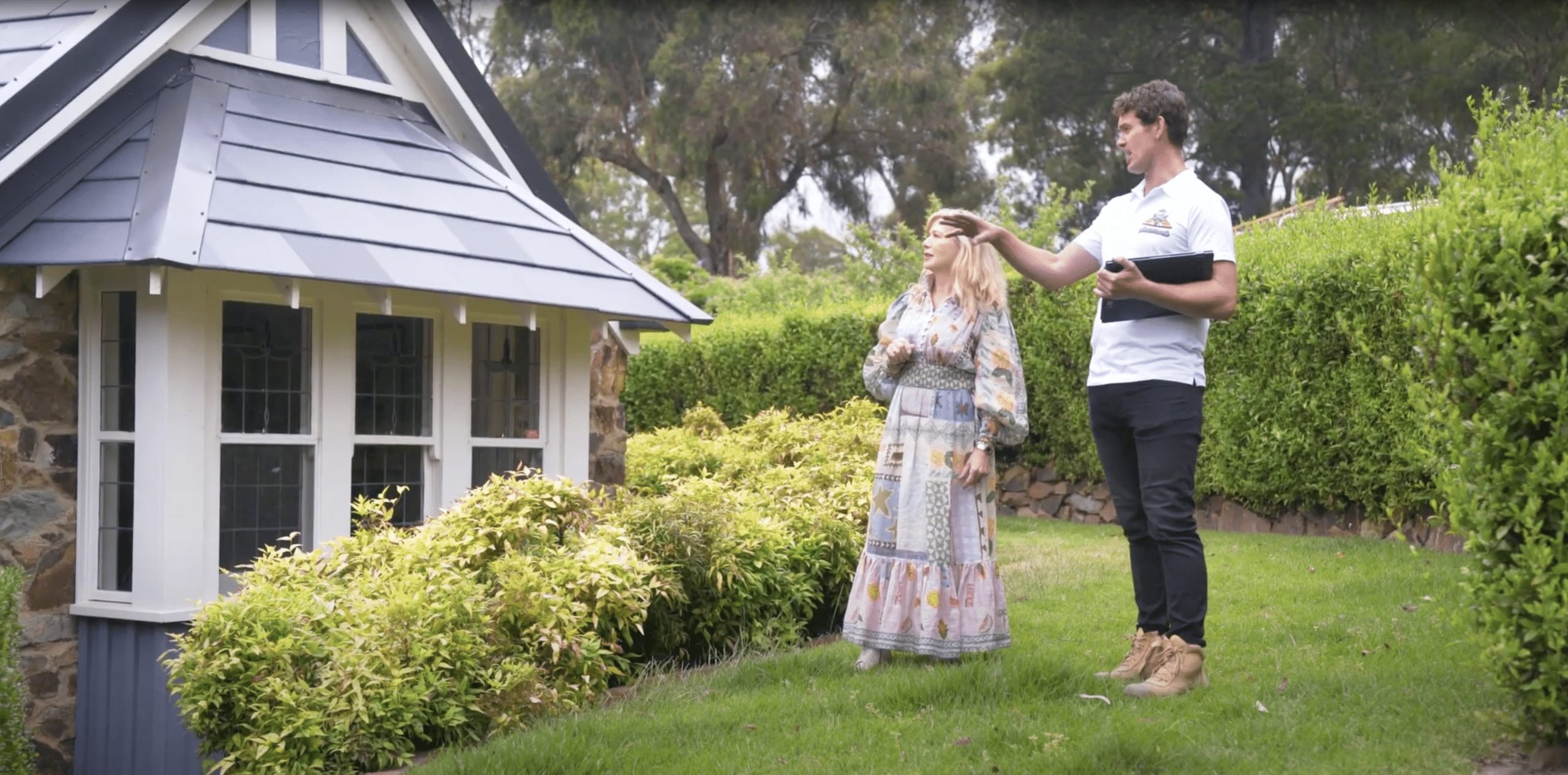

School Campus Roof Restoration and Repairs, Kew
A dozen ageing roofs across buildings of different eras, on a campus full of students that could not close, inside one budget and one calendar. The work that mattered was deciding what to do first.
A Campus, Not a Building
Schools are not single roofs. They are property portfolios that grew in stages, which means a campus of this age carries buildings from several different decades, each built to the standards and materials of its time.
That is the defining feature of the work. A 1920s hall, a post-war concrete tile classroom block and a recent extension do not share a roof material, a failure mode or a repair method. They only share a budget and a maintenance calendar.
Most of the roofs across this campus were dated and approaching the end of their serviceable life at roughly the same time. Not failed. Approaching. Which is a harder problem than outright failure, because it forces a decision rather than a response.
Four Things That Set the Scope
Every roof was ageing at once.
Not one emergency, a dozen slow declines at different rates. Something had to be sequenced, because attending to them in the wrong order would have meant spending money on roofs that should have been left.
No two buildings were the same.
Different eras, different materials, different geometry. One method could not be applied across the campus and the same specification could not be used in more than one place.
The site was full of students.
This is a harder access constraint than height. Exclusion zones, debris control, no falling objects, movement supervised around a school day rather than a work day.
The calendar was fixed.
Term dates are not negotiable. Work happens in holidays, or it happens carefully around a functioning school. Either way, the roofing schedule bends to the academic one.
Individually these are manageable. Together they mean the roofing decisions were the easy part.
Working Out What to Do First
The brief was not a list of roofs to fix. It was a campus that needed a plan.
Every roof was assessed and sorted into what was failing now, what would fail within a few years, and what had life left in it if the metalwork around it was renewed. That distinction is where the money is. A roof with sound tile and failed capping is cheap to extend by a decade. A roof where the substrate has gone is not worth spending on at all.
Works were then sequenced so the buildings carrying the most risk were addressed first, and the roofs with remaining life were extended rather than replaced.
This is planned roof restoration as asset management rather than repair, and on a campus it is the part of the job that determines whether the budget was well spent.
Where Cleaning Was the Right Call
On another heritage church roof restoration in Kew, we advised the client not to clean the tiles, because the weathering was part of what the building is.
This campus was the opposite case, and it is worth explaining why, because the two decisions look contradictory and are not.
On a functional school building, organic growth is not patina. It holds moisture, blocks drainage and shortens the life of the tile underneath. There is no heritage value in leaving it. Targeted roof cleaning removes a genuine deterioration mechanism, restores the colour, and makes a campus look maintained, which matters to a school in a way it does not to a 19th century church.
Same terracotta roofing. Opposite call. The variable is what the building is for.
Working on a Site Full of Students
Height is the obvious risk on a school roof. It is not the one that shapes the job.
The constraint is everything below the roof. Ground-level exclusion zones under every work area. Debris and tool control so nothing can fall into a space a student might enter. Access routes and deliveries planned around a school day rather than a work day. Set-up and pack-down inside defined windows rather than left standing.
High-risk roofing on an occupied school is less about what happens on the roof than about guaranteeing what does not happen underneath it.
Campus at a Glance
Each building carried a different era, material and failure pattern. Ageing tile buildings received full roof restoration, extended rather than replaced. Heritage structures called for targeted roof repairs, with intervention kept to the metalwork and drainage. The scope was set building by building, not as a single programme.
What Was Done
A Campus Back in Service
The campus roofs were brought back to serviceable condition without a full replacement programme, and without the school losing use of a single building.
Where tile and substrate were sound, renewing the metalwork and clearing the growth extended service life materially at a fraction of replacement cost. Where roofs were past extending, that was identified rather than papered over.
For a property team, the value was not the roofing. It was knowing which roofs needed money and which did not.
Carey is one of several institutional clients we work with across Kew.
Frequently Asked Questions
Yes. It requires ground-level exclusion zones, debris control, and access and deliveries planned around the school day rather than the work day.
Some works suit term time, others are better held for holidays. The sequencing is set with the property team before anything starts.
By separating roofs that are failing from roofs that are ageing. A roof with sound tile and failed capping can often be extended by a decade cheaply. A roof where the substrate has gone is not worth restoring.
Priority follows risk and remaining life, not the order buildings were built.
Usually both, and cleaning is not cosmetic. Organic growth holds moisture and blocks drainage, so removing it addresses a real deterioration mechanism.
On heritage buildings the calculation differs, because weathering can be part of the building's significance.
More Institutional and Heritage Roof Work
Institutional and heritage buildings across Victoria. Different clients and structures, the same commitment to what works.
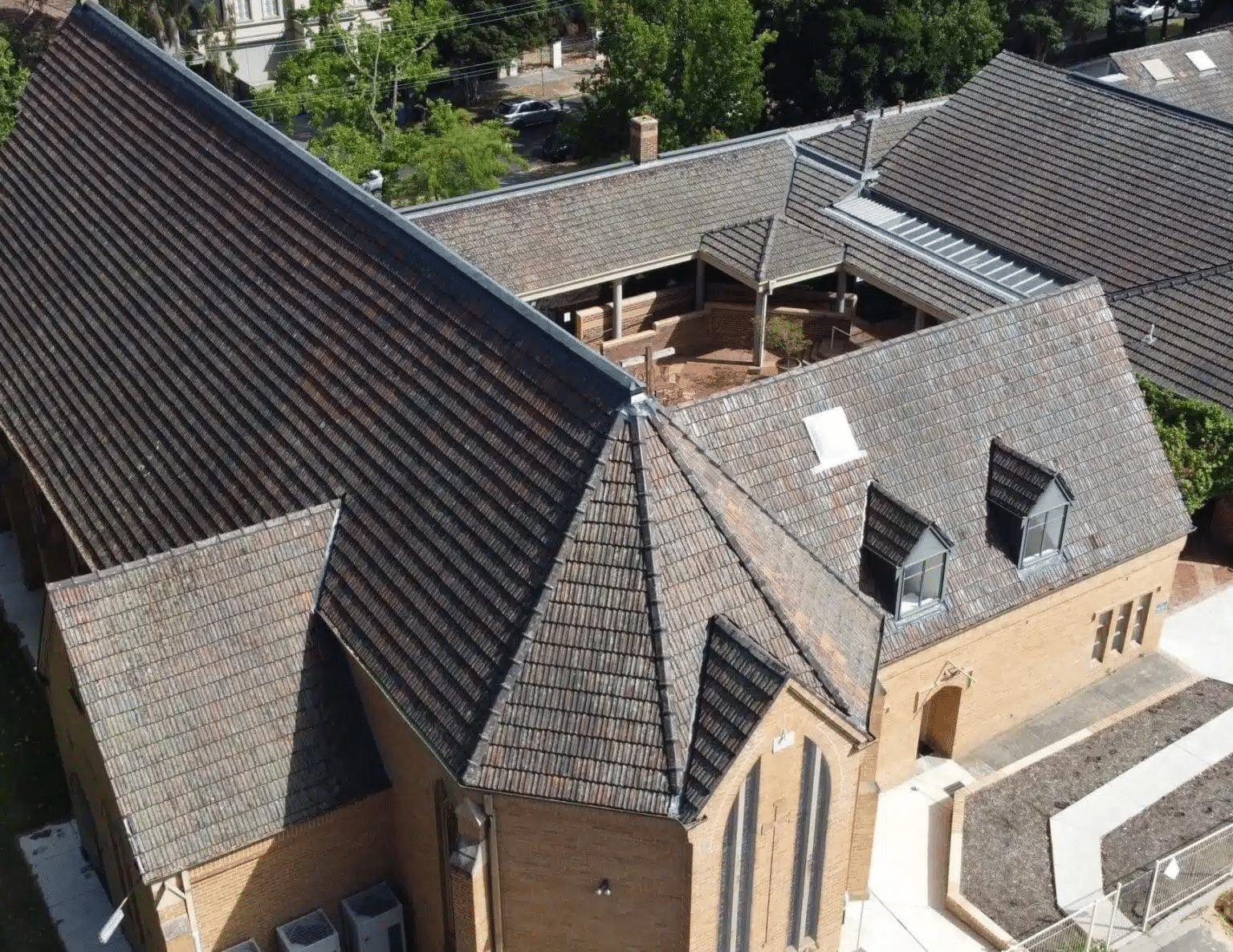
Heritage Terracotta Church Roof Restoration
A functioning church and school campus that could not close. Valleys and box gutters rebuilt across two coordinated stages, original patina retained.

Edwardian School Roof Restoration
Flashings, gutters and drainage upgraded on a heritage-listed school, with Edwardian rooflines fully preserved throughout.

Heritage Welsh Slate Roof Preservation
A 155-year-old Welsh slate roof that could not be replaced like for like. 80% of the original slate reinstated over a fully rebuilt roof system.
Managing Roofs Across a Campus or Property Portfolio?
We assess every roof, sequence by condition and risk, and deliver a documented scope with photographs suitable for board or committee approval.