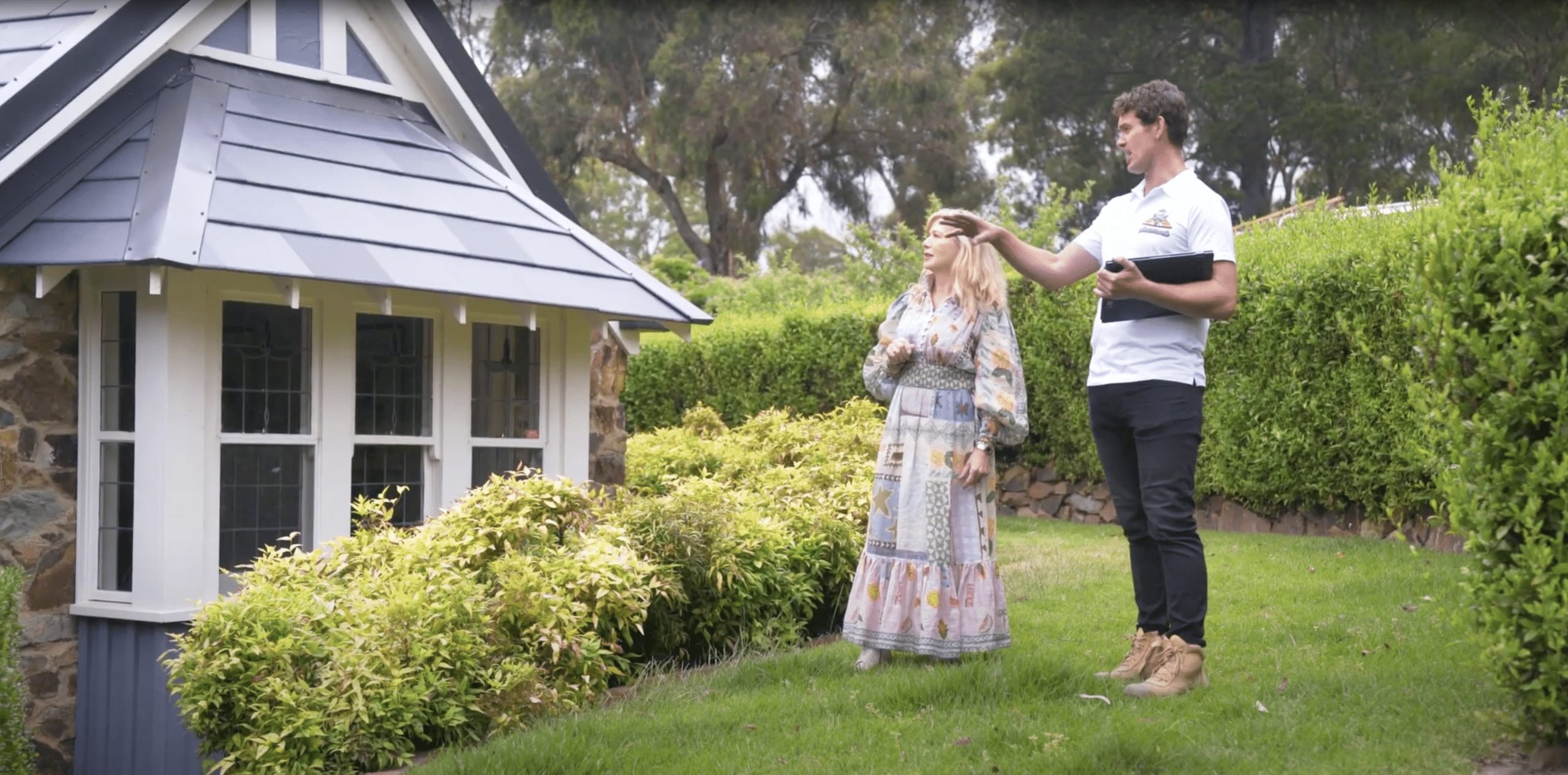

Slate Replaced with Barrington Shingle, Contemporary Home, Hawthorn
The client wanted everything slate looks like and none of what slate does. The whole roof came off and went back on in a larger shingle profile that reads the same from the street, takes foot traffic, and does not break in hail.
The Look Stayed. The Fragility Did Not.
From the street, nothing changed. On the roof, everything did.
What Slate Actually Costs You
We lay more natural slate than almost anyone in Melbourne, so this is not a criticism of the material. It is the best-looking roof you can put on a house.
It is also the least forgiving one, and it fails a modern household in two specific ways.
You cannot walk on it. Every time anyone needs to be on the roof, and in a modern home that is often, you are risking tiles. Solar installers, antenna technicians, gutter cleaners, air conditioning contractors, chimney sweeps. Every trade who goes up can cost you tiles, and matching replacement slate on an existing roof is neither quick nor cheap.
Hail breaks it. Melbourne gets damaging hail, and slate cracks. Not always visibly, and not always immediately, which is worse.
For a heritage building those costs are worth paying, because the material is the point. For a contemporary home they are simply costs.
Slate Without the Fragility
This client had lived with both problems and was clear about what they wanted.
A sleek look, like slate. Something more contemporary. And critically, a roof that could be walked on afterwards and take hailstones without breaking.
That is a genuine trade-off rather than a wish list. Appearance pulls one way and durability pulls the other, and most of the obvious answers give up one to get the other. Colorbond solves the durability problem and loses the look entirely. Another slate roof keeps the look and changes nothing else.
Why Barrington Shingle, Not Barrington Slate
Barrington makes two products that get confused constantly, and the difference mattered here.
Barrington slate tile has a slate-sized profile. It is what we use on heritage work where the roof has to match original slate coursing, including in the solar zones of a heritage home a few streets away.
Barrington Shingle is a larger profile and a different product. It reads as slate from the ground while covering more area per tile, and it tolerates the foot traffic and impact that natural slate does not.
On a heritage roof the smaller profile is correct, because the coursing has to match what was there. On a contemporary home it does not, and the larger shingle profile gives a cleaner, more modern line.
Stripping a Slate Roof Properly
Scaffold went up first, then all capping came off before anything else was touched.
The old slate and battens were removed and binned, with the site cleaned as the work progressed rather than at the end. On a full roof replacement on an occupied home, cleaning as you go is not tidiness. It is the difference between a fortnight of disruption and a fortnight of chaos.
Setting the Gauge
This is the part that decides whether a shingle roof looks right or looks laid.
New batten gauges were set to suit the Barrington Shingle profile, then new timber battens and sarking were installed across the whole roof. Gauge is everything on a larger tile, because any drift compounds visibly across a plane rather than disappearing into the coursing the way it can on small-format slate.
Each tile was fixed with two screws. Not clipped, not relying on weight. Screwed, twice, every tile.
Valley tiles were cut to a straight line marked in the valleys before fixing, rather than cut to fit as the work reached them. That is slower, and it is why the valleys run clean instead of ragged. It is also the detail nobody asks about and everybody sees.
New Colorbond capping finished the roof, which was then washed down to remove dust from the cutting.
Scope of Works
The Outcome
The whole roof came off and went back on in two weeks.
That is fast for a full strip and re-lay, and it matters more than it sounds. A roof replacement on an occupied house is measured in how long the household lives around it, not in how long the invoice says.
From the street the house reads the way the client wanted: sleek, dark, slate-like, cleaner in line than the original. The difference is what happens next. When the solar installer comes, or the gutters need doing, or Melbourne throws hail at it, nothing breaks.
We are slate specialists. Slate is also the wrong material for some houses, and this was one of them. Saying so cost us a slate job and got the client the roof they should have had.
The Same Suburb. The Opposite Decision.
A few streets from this house we replaced the roof on a 1930s heritage home in the same suburb. That client also had a problem with slate not taking foot traffic or fixings, because they wanted solar panels.
We reached the opposite conclusion.
On the heritage home we kept the natural slate across every visible plane and used Barrington only in the two designated solar zones, because on a landmark building the material is the point and the compromise belongs where nobody can see it. We did the same on a third Hawthorn home, where keeping the slate was clearly correct.
Here we removed the slate entirely, because on a contemporary home liveability is the point and the appearance can be reproduced.
Slate kept across every visible plane
Heritage home
Barrington used only in two designated solar zones. The material is the point.
Slate removed entirely
This project
Barrington Shingle across the whole roof. Liveability is the point; the appearance can be reproduced.
Slate kept
Roughcast home
Full Glendyne slate replacement on a third Hawthorn home. Keeping the material was clearly correct.
Three projects. Two conclusions. Both were right for the building they were on.
Peter had the old roof and the new one, so he is the one who can compare them.
"Michael and the team take pride in what they do and you end up with a first class job."
Peter Moore, Hawthorn, slate to Barrington Shingle replacement, 2025
Frequently Asked Questions
Not safely, and not without cost. Natural slate cracks under foot, and the damage is often not obvious at the time. Any roof that needs regular access for solar, antennas, gutters or air conditioning will lose tiles steadily.
Slate-profile tiles like Barrington Shingle are designed to take the traffic.
Yes. Melbourne hail cracks slate, and the cracks are not always visible from the ground or immediately after the storm.
That delay is the problem, because water gets in before anyone knows there is damage.
Barrington slate tile has a slate-sized profile and is used where coursing needs to match existing slate, typically heritage work.
Barrington Shingle is a larger profile, covering more area per tile, with a cleaner modern line. Both read as slate from the ground.
Yes, and it is a common request. The appearance carries well at normal viewing distance.
What you gain is a roof you can walk on and that survives hail. What you give up is genuine natural slate, which on a heritage building is usually not worth giving up.
It depends entirely on the building. On a heritage home the slate is the point and the right answer is almost always to keep it.
On a contemporary home where the roof needs to be accessible, the practical costs of slate can outweigh what it gives you. It is an assessment of the house, not of the material.
More Roofs Where the Material Decision Was the Whole Job
Different buildings, different briefs, and the material decision was the whole job every time.
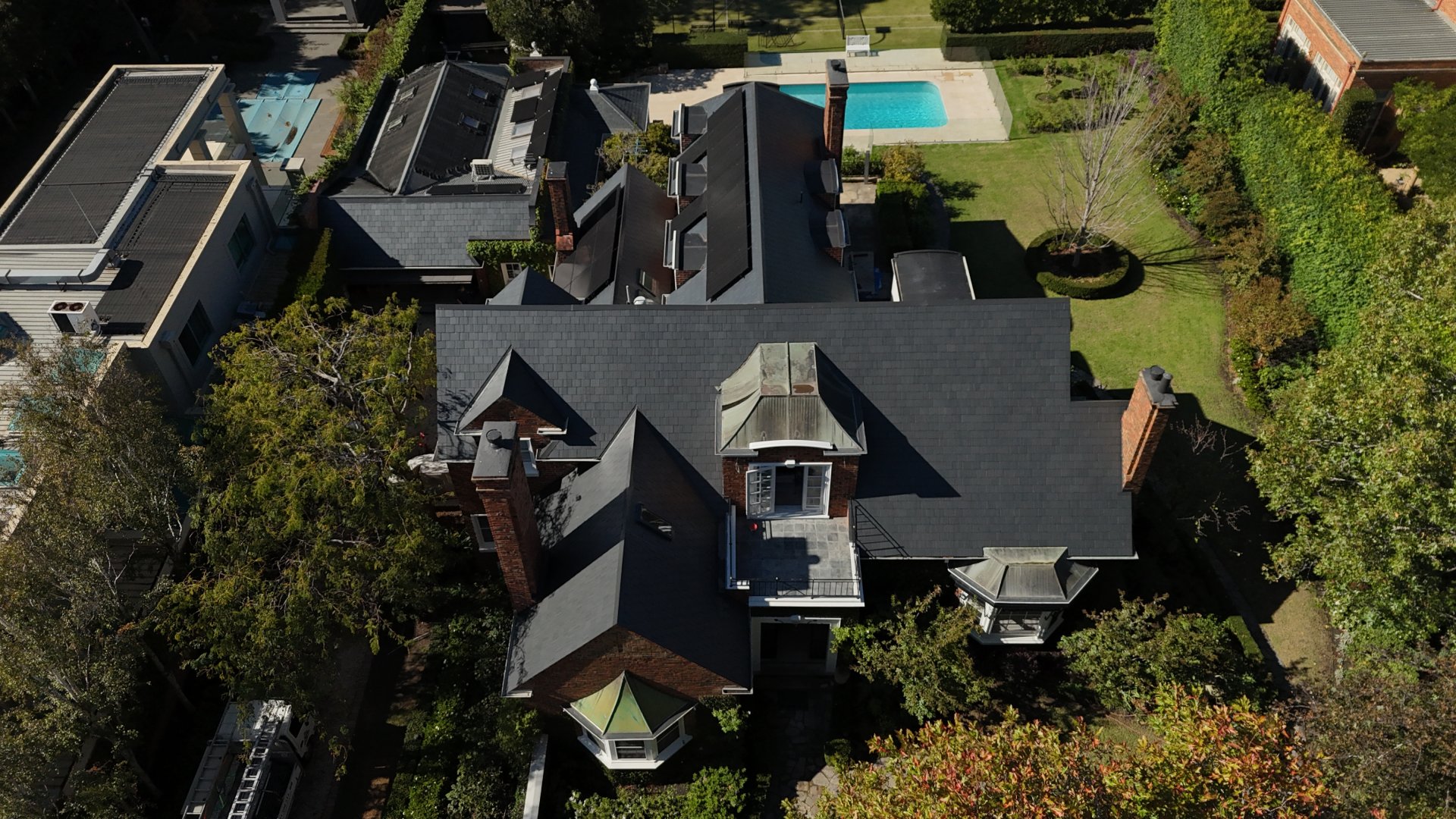
Heritage Slate Replacement with Solar Integration
Natural slate kept across every visible plane, with Barrington used only in the two designated solar zones so the panels could go on without changing the roofline.
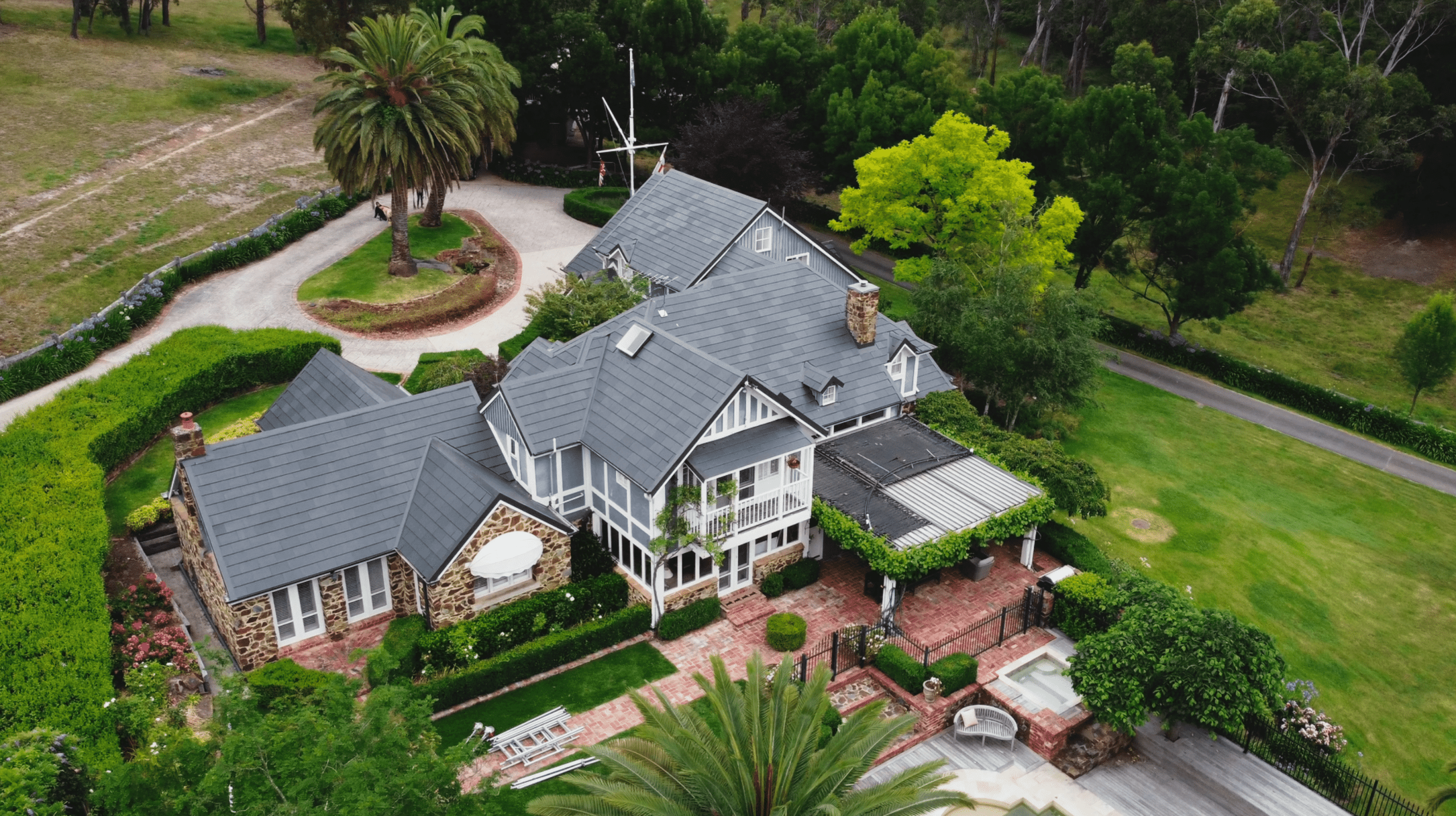
Cedar Shingle to Barrington Tile Replacement
A combustible timber roof on a bushfire-overlay block, replaced in non-combustible Barrington tile matched to the original cedar shingle profile.

Salvaged Terracotta Tiles on a New Build
78% of a discontinued terracotta roof saved from a demolished house and reinstated on the one that replaced it. Nothing new was ordered.
Slate Roof You Cannot Walk On?
Slate is the best-looking roof in Melbourne and the least forgiving one. If you are losing tiles every time someone goes up there, book an assessment. We will tell you honestly which way to go.